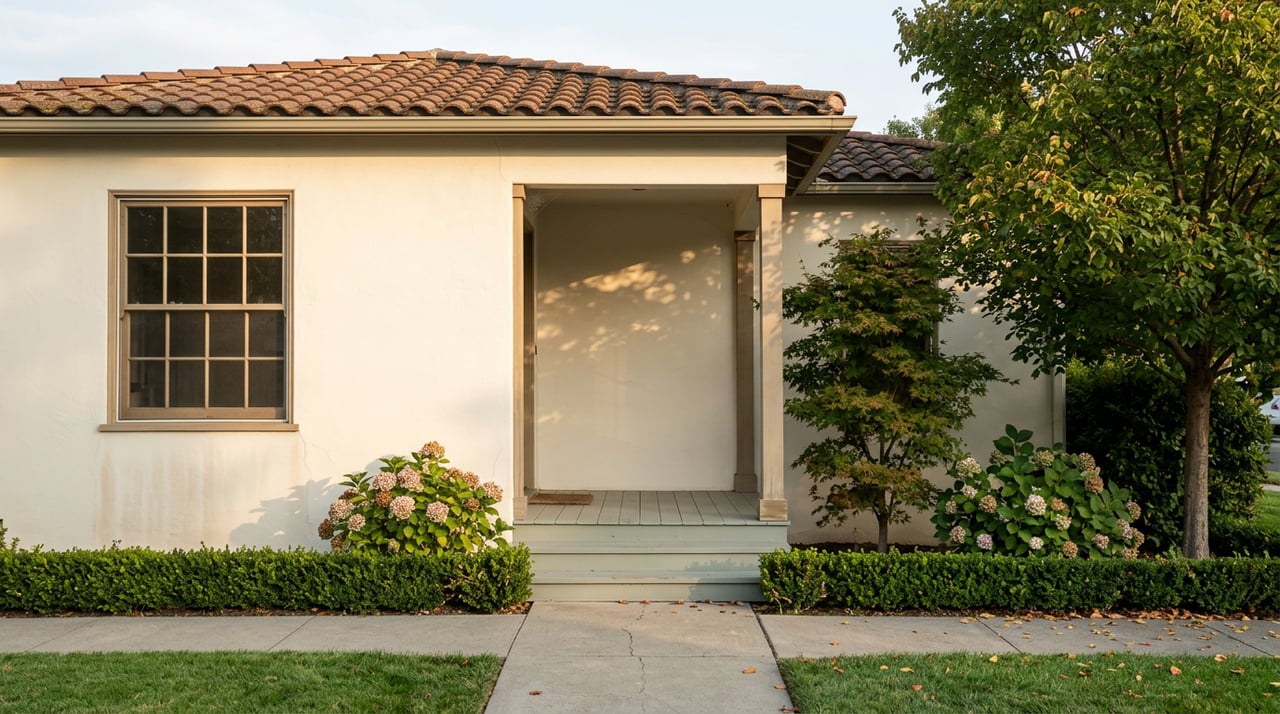
"There are no buildings even half the height within a mile of it."
Maren Sederquist said that to San José Spotlight in December 2025, the week a seven-story, 126-unit building won approval on a one-acre lot at the corner of Willow Street and Kotenberg Avenue. She runs the Willow Glen Neighborhood Association, and her point was about height. But it also named something buyers in this neighborhood have been paying for without quite saying it out loud: the assumption that Willow Glen simply does not do density.
That assumption is no longer backed by the zoning code. It is backed, at best, by how many more of these approvals arrive before the character actually shifts.
If you are comparing San Jose neighborhoods right now, that distinction matters more than the median price on any listing.
The mechanism, not just the building
The 940 Willow Street project got built the way it did because of a state law called Builder's Remedy, which took effect in 2023. Under it, if a city's housing plan is not in state compliance, that city cannot reject a qualifying project for failing to meet local zoning unless it can prove a specific threat to public health or safety. San Jose was out of compliance when the application came in. A state density bonus law then doubled the unit count the site could otherwise hold. The result was a building the surrounding R-1 blocks were never zoned to produce, approved over the objection of residents like Michelle Belasco, a 40-year Willow Glen resident who told the city the project was "too large for a very old neighborhood" and raised concerns about the strain on an aging sewer system.
Not every resident opposed it. One neighbor, who gave his name only as Emanuel at the hearing, said he grew up walking past the liquor store the project will replace and welcomed the idea of 126 more people getting to live in the neighborhood. Both views are on the public record. What matters for a buyer is not who was right, but that the city's own planning staff said no local exception applied. The project was approved because state law left no legal room to deny it.
This is not a one-time event you can file away. San Jose's adopted housing plan commits the city to more than 62,000 new homes by 2031, with 15,000 of them income-restricted, and Builder's Remedy exists specifically to keep cities from slow-walking that number through zoning. As long as San Jose is working through that obligation, more applications like this one are the mechanism, not the exception.
Willow Glen has done this before, quietly
The Willow Street project made headlines partly because it fought its way through a contested hearing. A quieter version happened two years earlier and drew almost no attention. In November 2023, the City Council approved a request from Los Altos developer De Anza Properties to rezone a narrow, one-acre lot at 1655 Lincoln Avenue, allowing five new homes where one currently sits. The item was placed on the council's consent calendar, the portion of the agenda reserved for routine business, and passed without discussion, even though neighbors had already raised concerns about crowding, lost views, and lost trees during the earlier planning process.
Two different legal tools, Builder's Remedy at Willow Street and SB 330 streamlining at Lincoln Avenue, produced the same outcome twice in two years on lots zoned for something smaller. That is a pattern, not a coincidence, and it is worth knowing before you assume the low-rise streetscape you are buying into is fixed in place.
What the current numbers actually show
None of this means Willow Glen has stopped being a strong single-family market. In June 2026, 57 single-family homes sold in Willow Glen at a median price of $1.97 million, with a median of 12 days on market and a list-to-sale ratio of 103 percent, meaning the typical home closed above its asking price. A year earlier, June 2025 saw 55 homes sell at a slightly higher median of $2.06 million, with a higher average price per square foot as well. Homes are still moving fast and still selling over list. The per-square-foot ceiling has come down slightly even as speed has held.
The more telling split is between house and condo. While single-family homes kept selling in under two weeks, the local condominium and townhouse segment cooled through the same stretch, with more units sitting on the market, fewer closing, and prices softening across the board. That divergence is exactly what you would expect if the premium buyers pay for a Willow Glen house is a premium for scarcity that does not apply once you are buying into a multi-unit building anyway. Houses carry the low-density story. Condos never did. If new multi-family supply keeps arriving on corridor lots, that gap between the two products is the one worth watching, not the headline median.
Where the pressure actually lands
Willow Glen is not uniform, and the zoning risk is not evenly spread. The blocks within a short walk of Lincoln Avenue, between Willow Street and Minnesota Avenue, are the most protected in practice: the tightest lots, the least turnover, the highest premium for walkability to the shops and restaurants that make the street what it is. North of Willow Street toward Interstate 280, the neighborhood was already denser before this current wave: completed transit-oriented projects near downtown Willow Glen, including Elements, Mosaic, Midtown Plaza, and Cannery Square at Monte Vista, already account for more than 1,200 units between them. That is also the stretch closest to the 940 Willow Street site. South of Curtner Avenue, in the quieter Lincoln Glen area, and in the small historic pocket known as Palm Haven, the lots are further from any transit-corridor logic that tends to attract these applications, though "further from" is not the same as "immune."
If you are comparing Willow Glen to a neighborhood like Almaden Valley, the contrast is useful. Almaden's premium rests more on school-attendance boundaries and larger, newer lot sizes spread across a genuinely spacious valley, not on a fixed retail corridor the way Willow Glen's does. That makes it a different kind of bet: less exposed to this specific corridor pressure, more sensitive to which side of a school boundary line a given house sits on.
What this actually changes about how you shop here
| What buyers have assumed | What's actually true right now |
|---|---|
| Willow Glen's R-1 zoning limits new construction to single homes | State law can override that zoning project by project through Builder's Remedy and density bonus provisions |
| Neighborhood opposition can stop an out-of-scale project | Planning staff cannot legally deny a compliant application even when residents object |
| A higher single-family price reflects scarcity that can't be replicated nearby | New multi-family supply is already arriving block by block near Willow Street, Lincoln Avenue, and the downtown-adjacent corridors |
None of this means the house you are considering is about to be surrounded by mid-rises. It means the zoning map is not the guarantee it looks like on paper, and a buyer who is paying a premium specifically for permanence should ask a few sharper questions before writing an offer.
- Ask whether the specific block has fronted any pending rezoning or Builder's Remedy application, not just whether the neighborhood in general has seen one.
- Ask how close the lot sits to a corridor the city has already densified, since that history tends to predict where the next application lands.
- Ask about lot size and depth relative to neighbors. Narrow, deep lots like the one at 1655 Lincoln Avenue are the ones that attract this kind of rezoning interest.
A short FAQ
Does this affect every street in Willow Glen, or just the ones on Lincoln Avenue and Willow Street? So far, both approved projects sit directly on major corridors rather than deep in the interior residential blocks. That is the pattern to watch, not a guarantee about any specific interior street.
Will Willow Glen see more of these approvals? As long as San Jose is still working toward its state-mandated housing production numbers, the legal tools that produced these two projects remain available to other applicants. More applications on corridor-adjacent lots would not be a surprise.
Does this mean home values will fall? The June 2026 data does not show a falling market. It shows a market still selling fast and still over asking, with per-square-foot pricing slightly softer than a year ago. Whether that softening has anything to do with new supply nearby is a reasonable question to raise with a local agent who is watching a specific block, not something a citywide number can answer on its own.
If you are weighing Willow Glen against another San Jose neighborhood, or trying to figure out what a specific block's zoning history actually says about your offer, Megan DeVivo can walk through the parcel-level details with you. Let's Connect.